








Le Reve - The Blog
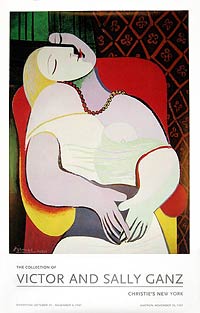 A few weeks ago, I wrote about a poster I was auctioning on eBay. The poster was from the Christie’s auction of Picasso’s painting “Le Reve,” a painting with a recent history that is arguably more interesting than its early history. The story in a nutshell: The painting’s owner just sold it for a record-setting price, and then accidentally stuck his elbow through it.
Well, here’s just a quick follow-up: The guy who bought the poster from me has started a blog about it called Le Reve and Me. On his blog, he wonders if he should expand his new collection of Le Reve memorabilia to include the auction catalogs, and he ponders whether or not he should stick his elbow through the poster. I have no idea what else he plans on doing with his blog, as I suspect the amount of Le Reve memorabilia to be had is fairly limited. But I’m sure he’d appreciate your input. It’s a fascinating story, and it just keeps getting better. Who knows what his collection will fetch some day?


Comments
I still think someone should start making paintings with their elbows and get Stevie Wynn to buy a couple for 30 thousand a piece.
Posted by: unlikelymoose | February 1, 2007 11:01 AM